Soviet New Year’s Cards 1954–1991: A Large Living Collection
Sometimes winter smells not like weather, but like something else — a box of postcards that once lay under an old blanket at grandma’s place. These small cards — 200 of them, in my case — quietly survived tall Christmas trees, Soviet interest rates, and long lines for mandarins.
Their time frame is honest: from 1954 to 1991. Everything that fits between those numbers — laughter, oddities, and that very New Year spirit that never really disappeared, it just hides sometimes.
In short — yes, this is an article about postcards. If a bit longer… well, let’s see.
Categories (where you can jump right away if you don’t feel like reading):
History of Soviet New Year postcards (1954–1991)
How the style changed
Postcards of the 1950s feel like strict people dressed in festive suits. A lot of realism, almost no mischief. Children are present, but as if under the watchful eye of an adult editor.
In the 1960s everything becomes lighter. Snowballs, sleds, girls with bows and boys in enormous fur hats. More plots, softer colors.
Then comes 1970, and something… cosmic begins. Literally. Spaceships, stars, glow — the New Year rushes forward together with Gagarin and everyone who dreamed of Mars.
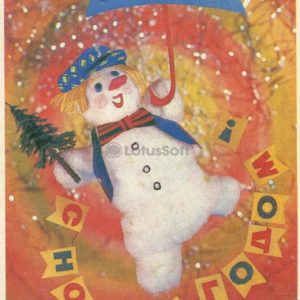
The 1980s — wow. Bright, sometimes even too bright. Cartoon characters, strange fonts, colors that don’t ask for permission. Fun, and a bit chaotic.
At the very end — 1990–1991. You can already feel that everything is changing, as if the postcards themselves aren’t quite sure where it’s all heading.
Symbols
Snegurochka — almost always kind, sometimes slightly strict.
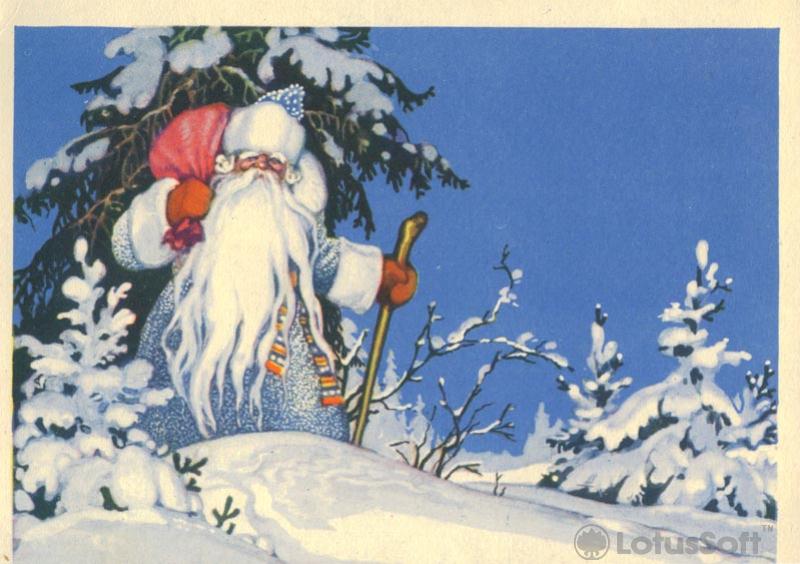
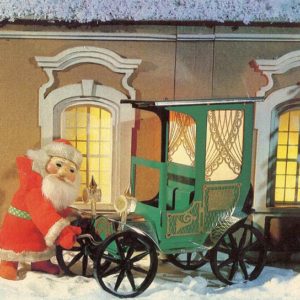
Ded Moroz — from majestic to “a kind old man in a padded jacket.”
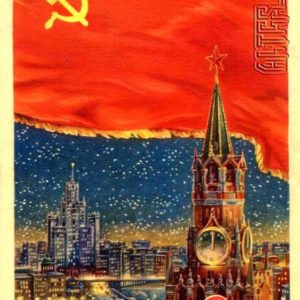
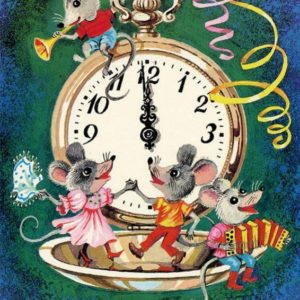
The Kremlin, clock chimes, Christmas tree ornaments — classics.
And space… why is it there? No one knows, but it works.
Publishers
“Izogiz,” “Planeta,” “Soviet Artist” — old, heavy names that somehow feel warm.
Publishers did real work: printing solutions, manual retouching, photographers, artists. This is not just a piece of cardboard.
Postcard catalog (1954–1991)
Here I split everything by decades — it’s simply easier to browse and remember, honestly.
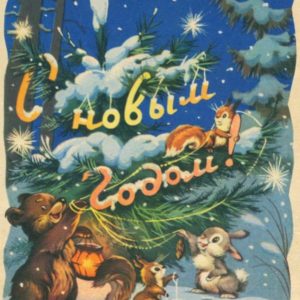
1950s postcards
A bit strict, a bit tired, but incredibly warm.
The first postwar winters — with their own kind of light.
1960s postcards
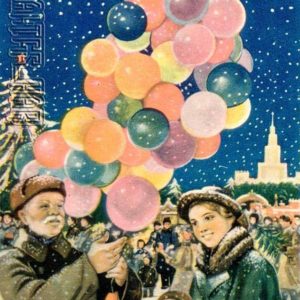
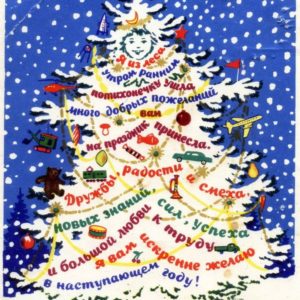
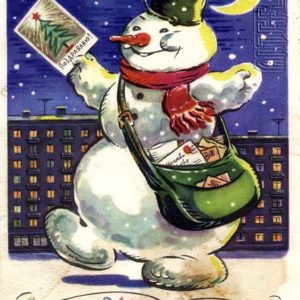
Snowballs, children’s smiles, ear-flap hats the size of balloons.
A very soft palette. Very real faces.
1970s postcards
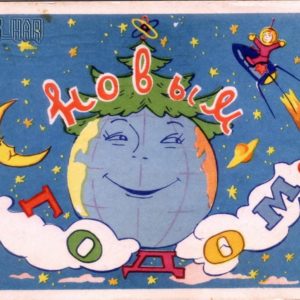
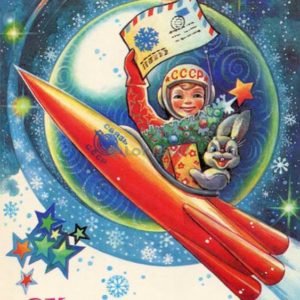
The space age.
There are postcards where Ded Moroz looks ready to pilot a Soyuz spacecraft.
Or where a child waves toward the Galaxy. Once I saw a postcard where the Christmas tree looked almost like an antenna.

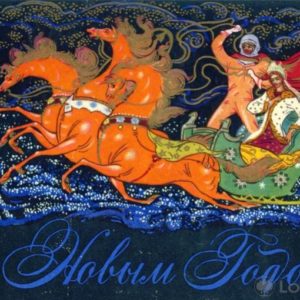
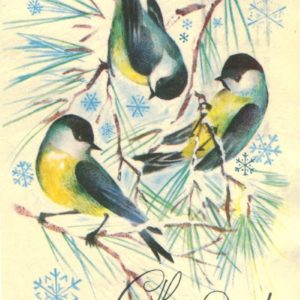
1980s postcards
Animals, toys, cartoon-style graphics.
Lots of color. Sometimes too much — and that’s fine.

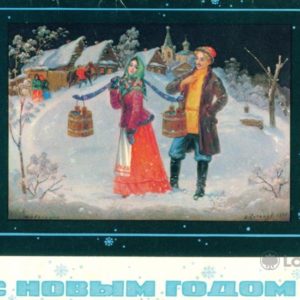
1990–1991 postcards
A strange era. Transitional, sometimes touching, because you can already feel it: these are the last postcards of such a time.
How to determine the year of a New Year postcard
Sometimes the year is written directly. Sometimes the publisher’s code says more than it seems.
Stamps help. Paper quality too. Some postcards can be recognized by the font — you’ll never confuse the 60s with the 80s.
And yes, a reprint is different. Usually the color feels “off.” You have to see it.
How much Soviet New Year postcards cost
I don’t sell postcards — so this will be an honest conversation.
The price depends on the year, rarity, print run, and condition.
Collecting is a strange thing. And a pleasant one.
View the full catalog
If you just want to browse, go here:
Full category of New Year postcards (1954–1991)
FAQ
— Which postcards are the rarest?
Those with a small print run + a bright plot + good condition. Rarity loves coincidences.
— How can you know the year exactly?
Code, font, stamp, series. Sometimes you have to guess.
— Which themes were popular?
Ded Morozes of all sizes, space, Soviet children, toys, the Kremlin.
— Where can I see the whole collection?
In the New Year postcards section — everything I’ve digitized is there.
And finally
These postcards are a piece of New Year that you can’t buy.
Only see.
Sometimes remember.
Sometimes — just smile, because in 1976 someone drew a squirrel that looks like a secret agent.
If you want more — head to the catalog. Honestly, it’s better than any words.